When to Worry About Hair Loss: Differentiating Normal Shedding from True Concern
Finding extra hair on your pillow during exam season, noticing more strands in the shower after a stressful work period, or watching hair fall out following a corrective knee operation can be unsettling. In moments like these, it’s easy to assume something is wrong. But hair loss isn’t always linear or predictable. Every strand moves through a natural cycle of growth, rest, and shedding, and losing hair daily is part of that process.
For most people, shedding anywhere between a few dozen and over a hundred strands a day can still fall within a normal range. The challenge lies in knowing when this everyday turnover crosses into something that deserves attention. So how do you tell the difference between temporary shedding and hair loss that signals a deeper concern?
Understanding Natural Hair Shedding: What’s the Normal Range?
Your scalp holds tens of thousands of strands at any one time, and not all of them are meant to stay put indefinitely. This is because hair follows a natural renewal process, where older strands are shed to make room for new growth. Problems tend to arise only when this balance is disrupted and shed hairs are no longer replaced.
What matters more than a single heavy day is the pattern that develops over time:
- Daily turnover is expected: On average, shedding around 50 to over 100 hairs a day is part of the normal renewal cycle and usually goes unnoticed over time.
- Fluctuations are normal: Some days, the hair loss looks heavier than others, especially after washing or brushing, without indicating a problem on their own.
- Replacement matters more than count: Shedding remains within a healthy range as long as new hairs continue to grow in and overall density stays stable.
- Consistency over weeks: Normal shedding tends to balance out across weeks, rather than steadily increasing or concentrating in specific areas.
Gender Differences in Hair LossRisk and Shedding Patterns
Although hair shedding follows the same basic biological cycle in men and women, the way hair loss unfolds over time often differs since hormonal changes, life stages, and repeated stress on the follicles can shift the balance between shedding and regrowth. As a result, similar daily hair fall can lead to temporary thinning for one person, but progressive loss for another. This means that for some, shedding settles once the trigger passes. For others, it marks the beginning of a gradual thinning that continues if left unaddressed.
- Men: Permanent hair loss is more common, often following predictable patterns such as a receding hairline or thinning at the crown. Once follicles become inactive, regrowth is less likely without medical intervention.
- Women: Shedding is often temporary and linked to hormonal shifts like pregnancy or menopause, as well as physical stress from tight hairstyles or repeated styling. However, prolonged strain can still lead to lasting thinning if it continues unchecked.
Identifying Excessive Loss: Key Warning Signs
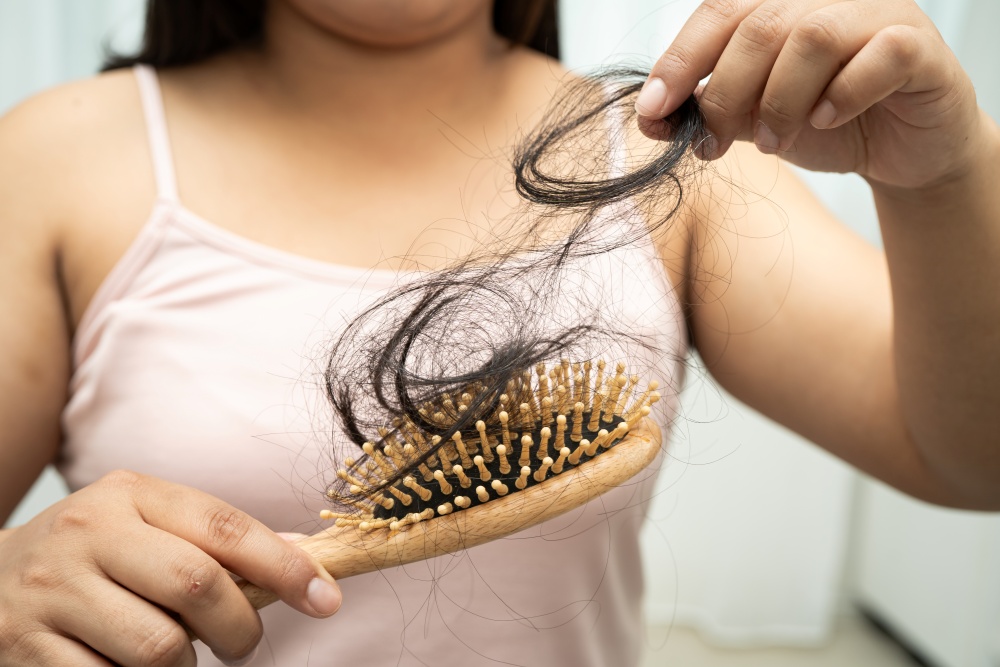
Shedding becomes a concern when hair fall is no longer balanced by regrowth. This is where the distinction matters: shedding refers to hair falling out as part of the cycle, while hair loss occurs when follicles stop producing new strands.
One simple self-check is the pull test. By applying light pressure and running your fingers through a small section of hair, you can get a sense of what’s typical for you. Losing a few strands during this test is expected. However, if the same motion repeatedly brings out noticeably larger amounts, it may point to an underlying issue rather than routine shedding.
Beyond daily shedding, changes in how and where the hair is thinning can offer clues about whether hair loss is becoming a longer-term concern. Some of these may include:
1. Pattern Thinning and Receding Lines
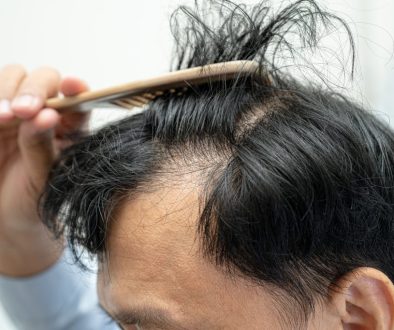
One of the clearest signs of true hair loss is a gradual change in shape or density rather than a sudden fall. Thinning often begins on the top of the scalp, where hair becomes finer, and coverage slowly reduces.
In men, this commonly shows up as a receding hairline or an M-shaped pattern at the temples. In women, the change is often subtler, marked by a widening part rather than bald patches. In older women, a distinct recession along the front hairline may occur, a pattern associated with frontal fibrosing alopecia.
2. Circular Patches and Scalp Symptoms
Hair loss that appears in round or irregular patches is another signal that deserves attention. These patches may develop on the scalp, beard, or even the eyebrows and are sometimes preceded by sensations such as itching, tenderness, or pain.
Changes on the scalp itself can also offer further clues. For instance, scaling, broken hairs, redness, swelling, or areas that ooze fluid may point toward an underlying scalp condition, including fungal infections such as ringworm.
3. Sudden, Dramatic Hair Loosening
A more alarming pattern is when your hair begins to come away in large amounts with minimal effort. This may show up as handfuls of hair collecting in the shower drain, on your pillow, or between your fingers after combing. Episodes like this are often triggered by a significant physical or emotional shock, such as surgery, illness, major stress, or sudden weight changes.
While the volume can feel extreme, this type of loss usually affects the scalp evenly rather than in specific patterns. In many cases, follicles remain intact, and hair growth resumes once the underlying trigger settles, though the period of thinning can still be distressing while it lasts.
4. Full-Body Loss
In some situations, hair loss is not limited to the scalp. Eyebrows, eyelashes, body hair, and facial hair may also thin or fall out at the same time. This pattern is most often linked to systemic medical conditions or treatments that affect rapidly dividing cells, such as chemotherapy.
Although the experience can be confronting, full-body hair loss is often temporary once treatment ends or the underlying condition stabilises. And when regrowth begins, it may not follow the same timeline or pattern as before, and changes in texture or density are not uncommon during recovery.
Consulting a Specialist: When to Seek Professional Advice
There comes a point where watching and waiting is no longer helpful. If hair loss continues for months, appears suddenly in patches, or starts to cause visible distress, it’s natural to question when hair loss becomes a concern and whether it’s time to stop waiting and seek advice.
A healthcare provider will look past what’s visible on the surface. This is where a clear hair history becomes important, including when thinning first started, where it’s most noticeable, whether hair loss is widespread or confined to certain areas, and any accompanying scalp changes or recent stressors. Taken together, these details help clarify whether the issue stems from increased shedding, structural breakage, or follicles that have slowed or stopped growth, which then guides what should be addressed next.
For those exploring longer-term options, a consultation at a hair loss clinic in Singapore can also clarify whether medical management or procedures such as a hair transplant are appropriate, and when they are not.