Maximising Your Results: Is Using Minoxidil After a Hair Transplant Necessary?
Undergoing a hair transplant can feel like you have finally taken control of a long and frustrating battle with thinning hair. However, the procedure itself can place stress on the scalp, and temporary shedding may occur during the recovery phase. At the same time, any native hair that was not transplanted may continue to thin if the underlying cause of hair loss has not been addressed.
Because of this, it is common to question whether using minoxidil after a hair transplant is actually required.
You can use minoxidil after a hair transplant. In fact, topical minoxidil remains a mainstay treatment for androgenetic alopecia and is also used in other hair loss conditions. But does combining surgery with minoxidil offer stronger long-term stability for your results, or is the transplant alone enough?
Minoxidil: What Exactly is it?
If a hair transplant physically relocates follicles to thinning areas, why is minoxidil often brought into the discussion afterwards? What role does it play that a hair transplant alone might not address?
Suchonwanit, P., Thammarucha, S., and Leerunyakul, K. (2019). Minoxidil and its use in hair disorders: a review. National Library of Medicine. https://pmc.ncbi.nlm.nih.gov/articles/PMC6691938/
Minoxidil was not originally created as a hair loss treatment. In the early 1970s, it was introduced as an oral medication for individuals with severe hypertension. During its use, doctors observed an unexpected side effect: increased hair growth in some patients.
This finding eventually led to the development of a topical formulation for androgenetic alopecia. A 2% solution entered the market in the 1980s, followed by a 5% version in the 1990s. It is also the active ingredient found in Rogaine.
Pharmacologically, minoxidil acts as a vasodilator. This means that it widens blood vessels, consequently improving blood flow to the scalp. With better circulation, follicles receive increased oxygen and nutrient supply. Over time, this can enlarge miniaturised follicles, increase hair shaft thickness, and prolong the growth phase of the hair cycle.
However, its effects continue only while the medication is maintained. Once stopped, the hair supported by it may gradually shed and return to its prior pattern.
Do You Need Minoxidil Aftera Hair Transplant?
So, do you need minoxidil after a hair transplant, or is the surgery alone enough?
From a clinical perspective, minoxidil is not required for graft survival since the transplanted follicles, once secured, do not depend on topical medication to remain viable. However, a hair transplant only addresses areas where hair has already been lost and does not halt the underlying process that may continue to affect surrounding native hair.
This is where minoxidil use is often considered as an adjunct rather than a necessity. While the procedure restores density in specific zones, minoxidil can support the existing, non-transplanted follicles that remain vulnerable to further thinning.
Core Advantages: Why Some Specialists May Recommend Minoxidil Post-Procedure
If minoxidil is viewed as supportive rather than essential, what practical difference can it make during recovery and beyond?
1. Minimising Post-Surgical Shedding
Around two to four weeks after the transplant, some patients may notice increased shedding in the transplanted area. This temporary response, often referred to as shock loss, occurs as follicles react to surgical stress. By enhancing scalp circulation, minoxidil may help vulnerable follicles remain active during this phase, potentially reducing the extent of shedding while the scalp recovers.
2. Speeding Up the Growth Timeline
After implantation, transplanted follicles typically enter a resting stage before visible growth resumes. This waiting period can feel longer than expected. Because minoxidil can support a shift back into the growth phase, some individuals observe new strands appearing sooner compared to relying on natural recovery alone.
Suchonwanit, P., Thammarucha, S., and Leerunyakul, K. (2019). Minoxidil and its use in hair disorders: a review. National Library of Medicine. https://pmc.ncbi.nlm.nih.gov/articles/PMC6691938/
Sica, D.A. (2007). Minoxidil: An Underused Vasodilator for Resistant or Severe Hypertension. The National Library of Medicine. https://pmc.ncbi.nlm.nih.gov/articles/PMC8109604/
3. Preserving Non-Transplanted Hair
A hair transplant redistributes donor follicles, but surrounding native hair remains subject to ongoing pattern thinning. Minoxidil primarily works to maintain and thicken existing strands, which can help reduce the risk of uneven density forming around the restored region.
The Lifespan of Treatment: How Long is Usage Required?
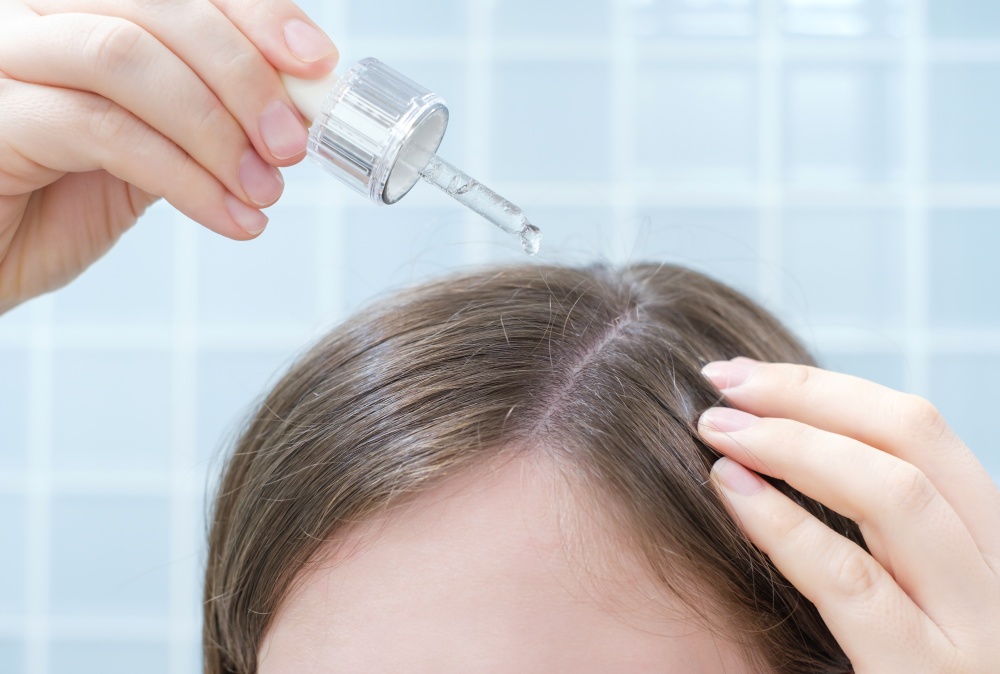
However, it is important to note that minoxidil is not a short-course solution. While some individuals use it in the early months to support recovery after surgery, its role extends beyond that initial phase because visible changes often require consistent application for several months. More importantly, continued use is necessary if you want to maintain the native hair that remains susceptible to DHT-related thinning.
Kassimir, JJ. (1987). Use of topical minoxidil as a possible adjunct to hair transplant surgery. A pilot study. PubMed. https://pubmed.ncbi.nlm.nih.gov/3558912/
Yeo, Y.W. (2017). Lotion Slows Down Hair Loss Rather Than Increase Hair Growth. Singapore General Hospital. https://www.sgh.com.sg/news/lotion-slows-down-hair-loss-rather-than-increase-hair-growth
And as mentioned, if the medication is discontinued, the follicles that were being chemically supported may gradually miniaturise again. In other words, stopping minoxidil can result in the loss of hair that was preserved through ongoing treatment.
Identifying When Minoxidil Should Be Avoided
Even though minoxidil can play a supportive role, it is not automatically appropriate for every individual after a hair transplant. Your scalp condition, overall health, and stage of hair loss all matter.
You may be advised to avoid or reconsider treatment if:
- There is extensive baldness with minimal native hair left to preserve
- You have a known allergy or hypersensitivity to minoxidil or its ingredients
- You experience persistent scalp inflammation, dermatitis, or open lesions
- You have underlying heart conditions or unstable blood pressure
Understanding Potential Post-Operative Side Effects
But is minoxidil always good and safe to use immediately after a hair transplant? Not necessarily.
While many individuals tolerate it well, your scalp is still healing in the early post-operative phase. Introducing topical agents too soon can create avoidable setbacks.
Possible reactions include:
- Scalp redness, itching, dryness, or flaking
- Mild irritation related to certain solution ingredients
- Temporary shedding as follicles adjust to stimulation
Exploring Other Options: Potential Alternatives to Minoxidil
If minoxidil is not suitable, or if you are exploring additional support, other recognised options may be discussed during follow-up care.
Common alternatives include:
- Finasteride: An oral medication that reduces dihydrotestosterone levels, addressing one of the hormonal drivers of pattern hair loss. It may be started before and after a hair transplant under medical supervision.
- Platelet-Rich Plasma (PRP): A treatment that uses concentrated growth factors from your own blood to stimulate follicle activity.
- Structured aftercare protocols: Medically recommended shampoos, antiseptic cleansing routines, and scalp care measures designed to protect grafts during healing.
Achieving Your Best Look
A hair transplant can restore density in thinning areas, but achieving a balanced and natural-looking result often involves more than the procedure alone. Over time, maintaining that outcome may require a longer-term strategy that considers how your hair pattern is likely to evolve. As such, the choice to use minoxidil, finasteride, PRP, or a combination approach should be guided by your specific pattern of hair loss, scalp condition, and expectations for future density rather than a one-size-fits-all plan.
If you are unsure which post-operative approach suits you, consult a hair transplant clinic in Singapore to review your progress and discuss a personalised hair growth treatment plan that aligns with your long-term goals.