The Link Between PCOS and Hair Loss: Why It Happens and What You Can Do
Many women living with polycystic ovary syndrome (PCOS) notice their hair thinning long before they connect it to the condition. Hair loss tends to be one of the less-discussed symptoms of PCOS, often overshadowed by irregular cycles or skin concerns. Yet for those experiencing it, the impact can be just as distressing.
This article looks at the link between PCOS and hair loss, what PCOS hair thinning tends to look like, and how it can be addressed from both sides.
A Quick Look at PCOS
Before getting into the hair connection, what exactly is PCOS?
PCOS is a common hormonal condition that affects women of reproductive age, characterised by an imbalance in reproductive hormones. One of its key features is elevated levels of androgens, sometimes referred to as “male hormones.” Androgens are present in all women in small amounts, but women with PCOS produce them in higher quantities.
This hormonal imbalance is what ties PCOS to a range of visible symptoms, hair changes among them.
How PCOS Causes Hair Loss: The Hormonal Pathway
So can PCOS cause hair loss, and if so, how?
Yes, PCOS can cause hair loss, and the mechanism behind it is the same one that drives male pattern baldness: the action of dihydrotestosterone (DHT) on hair follicles.
Here is how the pathway unfolds. The elevated androgens circulating in women with PCOS are converted to DHT by an enzyme called 5-alpha-reductase. DHT then binds to receptors on genetically susceptible hair follicles, shortening their growth phase. With each successive hair cycle, the affected follicles produce progressively shorter and finer hairs, a process known as miniaturisation. Over time, coverage in these areas becomes visibly thinner.
That said, not every woman with PCOS will experience hair loss. Susceptibility depends on whether the follicles carry a genetic predisposition to DHT sensitivity in the first place, which is why two women with similar PCOS profiles can have very different hair outcomes.
What PCOS-Related Hair Thinning Looks Like
If you’re wondering whether your hair loss is linked to PCOS, the most telling clue is the pattern. PCOS-related thinning typically appears at the crown and along the part line, with a widening centre parting often being one of the earliest signs. The hairline usually stays intact, which sets it apart from male pattern baldness, in which the hairline recedes.
Other signs also tend to accompany the hair changes. These include:
- Acne (particularly along the jawline and chin)
- Unwanted facial or body hair growth
- Irregular menstrual cycles.
When these appear alongside hair thinning, the picture is more likely to be hormonally driven than stress-related or nutritional.
However, PCOS hair loss can be mistaken for other forms of shedding, such as telogen effluvium, which is the diffuse shedding triggered by stress, illness, or postpartum hormonal shifts. The two can look similar in the early stages, which is why a proper clinical assessment matters before making an assumption about the cause.
Addressing Both Sides of the Problem
Effective PCOS hair loss treatment tends to work on two fronts at once: managing the underlying hormonal condition, and addressing the hair loss directly. Neglecting either side usually leads to disappointing results.
Treating the Underlying Condition
Managing PCOS hair loss starts with managing PCOS itself, which usually involves a gynaecologist or endocrinologist. Hormonal treatments, lifestyle adjustments, and management of insulin resistance can all help reduce the androgen activity driving the hair loss.
Without addressing this hormonal driver, hair-focused treatments alone tend to give limited results. Androgens keep converting to DHT, and the follicles remain under the same pressure that caused the thinning in the first place.
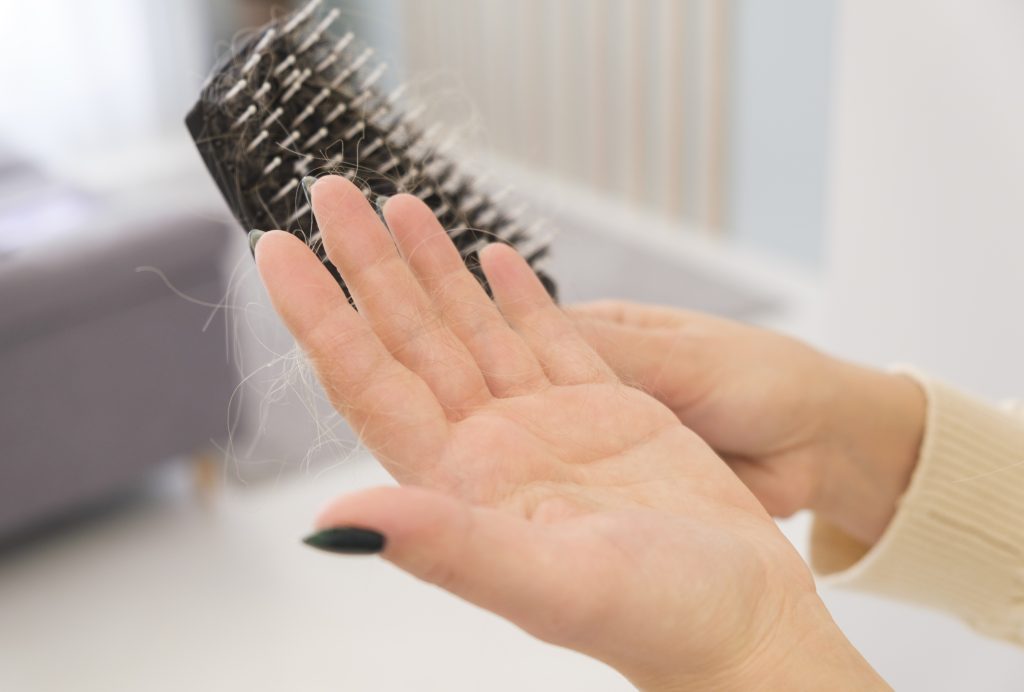
Treating the Hair Loss Directly
The second front is treating the hair loss itself. A hair loss clinic can assess the extent of follicle miniaturisation and recommend treatment based on what is happening at the scalp level. Options may include topical minoxidil, which extends the hair growth phase, and in some cases, oral medications considered alongside the hormonal management already underway with the gynaecologist or endocrinologist.
Supportive treatments such as scalp-focused therapies may also complement the medical picture, depending on individual assessment. Where miniaturisation has progressed significantly, and hormonal management alone is unlikely to restore density, a FUE hair transplant treatment may be discussed as part of a longer-term plan.
A common question is whether hair lost to PCOS can be regrown, and the honest answer to that is that it varies. Early intervention tends to offer the best chance of preserving existing hair, while regrowth in areas that have been thinning for years is more difficult to predict. Preventing further hair loss from PCOS follows the same principle of how you would manage the condition itself: address the hormonal driver early, and support the scalp with treatment matched to the individual pattern.
The Importance of a Proper Diagnosis
Because PCOS-related hair loss responds to different treatment than other forms of female thinning, self-diagnosis and self-treatment often disappoint. A treatment aimed at telogen effluvium, for instance, will do little for hormonally driven miniaturisation, and the reverse is equally true.
Getting the treatment right starts with a thorough assessment. This typically includes a scalp examination, a review of medical and family history, and where appropriate, blood tests to confirm the hormonal picture.
If you suspect PCOS may be behind your hair thinning, consider consulting Sage Medical for a hair growth treatment in Singapore that can assess the scalp side of the picture and work alongside your medical team managing your PCOS